Betting Bankroll Management Explained
August 21, 2026 Uncategorized Comments Off on Betting Bankroll Management Explained

The thunder of a last-minute goal, the quiet suspense of a final putt, the electric surge of a photo finish. Wagering is a stage of pure adrenaline. Yet behind every legendary run and every skilled player who consistently turns a profit, there’s no magic formula or special tip. There’s a hard, calculated, and strictly disciplined system called bankroll management. It’s the distinction between a fleeting thrill and a sustainable edge, between a gambler who chases losses into the abyss and a bettor who treats their capital like a business. Without it, even the most brilliant match previews and the most extensive knowledge of odds and markets become meaningless. The math of variance is harsh. A solid bankroll strategy doesn’t eliminate losing streaks, but it ensures survival through them, allowing the bettor to capitalize when the momentum turns. This is the art of staying in the game long enough for skill to overpower luck, and it begins long before the first wager is placed.
Logging: The Understated Weapon of Smart Bettors
A bettor lacking a detailed log serves as a ship missing a compass, floating on a sea of self-deception. The human memory is a creative writer, selectively recalling the memorable underdog wins while burying the numerous small losses that depleted the account. A proper record converts betting into a business, changing a hobby into a performance database. Every individual wager needs to be logged containing the date, the event, the market, the odds, the stake in units, the bookmaker employed, and the result. But the real power comes from incorporating a descriptive column: the logic behind the bet. Was it a fade of public perception? A weather-based edge? A tactical mismatch identified in a match preview? This turns the log from a mere ledger into a mirror indicating the bettor’s true advantage. Over hundreds of bets, patterns appear with unflinching clarity. The bettor may discover that their NBA fourth-quarter live bets prove to be generating money, while their pre-match football accumulators constitute a slow bleed.
This data facilitates ruthless improvement. The bettor can remove the losing markets like a surgeon cutting out a tumor and double down on the lucrative niches where their understanding actually beats the closing line. At Vegas Hero Casino, with its vast array of sports and markets, a bettor can use their records to specialize, turning into a master of a specific league or bet type rather than a jack of all trades. The log also acts as a emotional anchor during rough patches. When a bettor loses five in a row and experiences the world caving in, a glance at a twelve-month spreadsheet displaying a stable upward equity curve supplies the evidence needed to stay the course. It quiets the inner critic with hard facts. Record keeping is the unglamorous, meticulous work that distinguishes the professionals who pay bills with their winnings from the amateurs who just fund the ecosystem.
Defining the Stakes: The Golden Rules of Unit Sizing
The unit is the standard language of professional bettors: a set percentage of the total bankroll that balances risk irrespective of the odds or the sport. The golden rule, tested by decades of statistical modeling, says a individual bet should never exceed one to three percent of the total bankroll. A conservative one percent unit guards against the crushing downturns that are statistically certain to occur. When a bettor wagers five or ten percent on a single sure thing, they’re not staking; they’re taking a reckless gamble with their capital. Variance in sports is wild and untamable. A perfectly kicked ball can deflect off a defender’s heel, a dominant tennis player can twist an ankle, and a official’s whistle can void a winning bet in a heartbeat. The unit system withstands these shocks. If a bankroll of a thousand units drops to eight hundred, the bettor recalculates the one percent value, automatically cutting risk during a cold streak and preventing a catastrophic spiral.
This mechanical approach eliminates the ego https://vegasherocasino-fr.eu/betting/. A bettor never has to agonize over whether they “sense” more certain about a particular match. Confidence is a deceiver cloaked in dopamine. Instead, the stake is a direct mathematical output of the perceived edge and the available odds, translated into units. At Vegas Hero Casino, where match breakdowns and detailed statistics are readily available, a bettor can identify value, but value means little if it is not matched with precise sizing. A 2.50 underdog with a 45% implied probability calls for a different unit allocation than a 1.80 favorite with a 60% chance. The Kelly Criterion and its fractional variations offer a framework, but the fundamental principle remains: no individual result can be allowed to inflict a mortal wound. The unit is the shield, and using it daily is the only way to march through the guaranteed slumps without losing everything.
Psychological Fortitude: Steering Clear of Tilt and Revenge Betting
Tilt is the quiet bankroll destroyer. It descends like a fog after a bad beat, a last-second VAR decision that snatches defeat from the jaws of victory, or a missed penalty that defies all statistical logic. In that moment, the ancient mind hijacks the prefrontal cortex, and the gambler transforms into a being of impulse. The impulse to immediately chase the loss, to double the stake on the next available match to “get it back,” is an intense bodily drive. This is revenge betting, and it is the express lane to a zero balance. A disciplined bettor acknowledges that a lost wager is a done deal, a closed chapter that has zero bearing on the next independent event. The algorithm of the sportsbook does not care about the bettor’s emotions, and the next match does not owe a debt. The only way to defeat tilt is to build a circuit breaker into the routine.

Practical safeguards include setting a daily loss limit that, once triggered, locks the account until the next morning. A bettor might choose that losing three full units in a single day automatically ends the session, no exceptions. Distancing oneself from the screen is essential; standing up, walking away, and engaging a completely different part of the brain breaks the obsessive loop. At Vegas Hero Casino, the live betting console is a strong asset, but it can also be a danger for the tilted mind, as the rapid-fire nature of in-play markets offers swift, unwise openings to reload. The sharp bettor sees a losing day not as a crisis but as a data point. They review the wager analytically, asking if the process was solid and the value was real. If the answer is yes, the loss is just a standard expense. Emotional discipline is not about being a robot; it is about designing a system that makes self-destruction physically difficult.
Adapting Bankroll Strategies for Real-Time Betting and Live Betting Markets
Live betting adds a unpredictable new variable into bankroll management: speed. Pre-match analysis permits hours of calm deliberation, but in-play markets shift with every pass, every serve, and every possession. The odds fluctuate in real time, and the window of opportunity can emerge and vanish in seconds. This rapid tempo is a double-edged sword. For the disciplined bettor, it offers a chance to hedge positions, to lock in profits on a pre-match bet that is winning, or to exploit a momentum swing that the algorithm has not yet fully priced. However, the very speed that creates value also magnifies the risk of hasty, excessive staking. A bettor who consistently limits pre-match wagers to two percent of their bankroll can easily find themselves firing five or six in-play bets in a single half, unknowingly exposing twenty percent of their capital to the chaos of a single match.
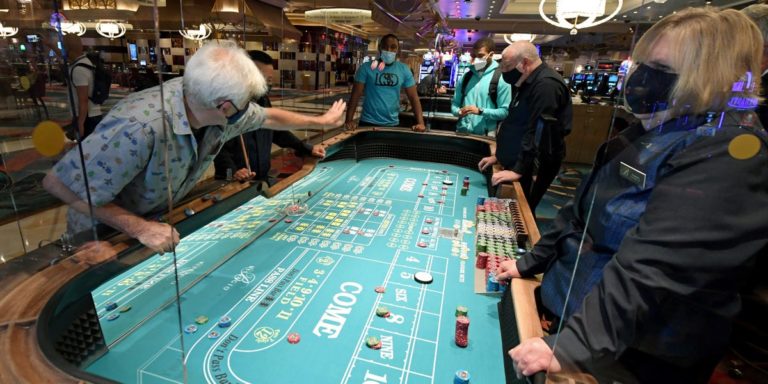
The adaptation necessitates a pre-set in-play budget that functions as a separate compartment within the overall bankroll. A bettor might assign only twenty percent of their total unit allowance per day to live markets, making sure that the slower, more analytical pre-match edge remains the primary engine. The unit size for in-play bets should be halved, accounting for the higher noise and lower certainty of real-time decisions. At Vegas Hero Casino, where the live streaming and dynamic graphics create an immersive experience, the bettor must view the interface like a cockpit, not a slot machine. Before kickoff, the strategy is already established: which scenarios will spark a bet, and exactly how many units are at risk. The bettor who steps into the live arena without a plan is not trading; they are reacting, and in the long run, reaction without a framework is just synonymous with gambling.
Sustainable Expansion: Compounding Your Profits Without Too Much Exposure
The ultimate goal of bankroll management goes beyond mere survival; it involves the gradual accumulation of gains over extended periods. A bettor who commences with a modest bankroll and secures a steady two percent return on investment per month isn’t chasing instant wealth but instead aims for exponential expansion. The key to achieving this compounding effect relies on the periodic recalibration of the unit size. As the bankroll grows, the raw cash value of the one percent unit increases, enhancing the return mechanism without raising the risk level. A bettor who progresses from a five-hundred-unit bankroll to a thousand units doesn’t require higher risk percentages for greater earnings; the same disciplined one percent stake now generates double the absolute return. This is the quiet, potent power of the process, but it needs a discipline most lack.
The most serious threat during a growth phase is the subtle hubris that prompts for the bettor to skip levels, to speed up the process by increasing the base unit to two or three percent. That decision is the origin of disaster, planted in the fertile soil of success. A single standard deviation of negative variance, which is statistically unavoidable, will eliminate months of hard-won gains if the unit size has been increased. The sharp bettor treats a growing bankroll with the same cold respect as a starting one, adjusting stake amounts on a set schedule, perhaps every month or after a twenty percent increase in total capital, and never in reaction to a hot streak. At Vegas Hero Casino, the long-term player considers the site’s broad offerings and game analyses not as a sprint but as a marathon with no finish line. The bankroll is a dynamic organism, and its steady, disciplined growth is the truest measure of a bettor’s mastery over the game, a quiet victory written in spreadsheets rather than shouted from the rooftops.
The Core: Why Capital Management Divides Winners from Fantasy Seekers
Most leisure players join the field with a simple, fatal mindset: choose winners, win money. They absorb statistics, study form, and obsess over team news, convinced that accuracy alone is the key. The brutal truth is that even a 55% win rate on even-money bets can cause ruin if the stake sizing is reckless. Bankroll management is the foundational steel beneath the surface. It sets the exact amount of capital set aside only for betting, money that is completely detached from housing costs, bills, and daily life. This psychological separation is the initial shield against emotional disaster. A punter who dips into essential funds has already lost the war, because fear and desperation will govern decisions, not logic. The allocated bankroll becomes a tool, a weapon that must be protected at all costs. Sharp bettors see a losing day not as a personal failure but as a minor operational cost within a extensive, long-term campaign. They recognize that the bookmaker’s edge is beaten not by one perfect ticket but by grinding out small, mathematical advantages over thousands of wagers, and that grind is not possible without a fortress around the capital.
At a site like Vegas Hero Casino, where the depth of markets spans everything from Champions League clashes to niche table tennis, the temptation to spread funds is immense. The absolute volume of live betting opportunities and pre-match specials can create a false sense of urgency. A structured bankroll strategy applies a necessary friction, forcing the bettor to ask whether a wager is a calculated investment or an impulsive gamble. It changes the chaotic noise of a hundred daily fixtures into a curated stream of high-probability plays. The cornerstone is built on a single, non-negotiable rule: the bankroll is inviolable, and every decision flows from its total size, not from the heat of the moment. Without this anchor, the bettor is just a leaf in a storm, fated to be blown off course by the first gust of a bad beat.
The Percentage Model Flat Betting vs Variable Strategies
Level staking is the most stable and psychologically sustainable strategy for the large majority of punters. It means wagering the same fixed unit amount on every single wager, no matter the perceived strength of the wager. A flat bettor might stake two percent of their bankroll on a Champions League final and the identical two percent on a midweek lower-tier fixture. This method removes the dangerous practice of listing “bets of the year” and overloading the wager. The appeal of flat betting lies in its stark simplicity; it insulates the bettor from their own thinking biases. Humans are dreadful at differentiating between a 52% edge and a 54% edge in the midst of the action, and over a short period the outcomes look almost identical. By holding the risk steady, the player guarantees that no one bout of overconfidence can ruin a month of steady grinding.
Variable methods, such as the fractional Kelly Criterion or a tiered confidence system, are designed for those with a rigorously established edge. A bettor might designate one unit to standard bets, two units to high-value plays, and half a unit to risky longshots. However, this path is littered with the corpses of those who mixed up a lucky streak with genuine skill. The variable system demands careful record keeping and a cold, analytical mind that can truthfully assess whether a betting line is priced incorrectly. At Vegas Hero Casino, where in-play markets shift fast, a variable approach can be applied to in-play situations where the bettor has a real-time read on momentum that the algorithm has not yet accounted for. Yet for each bettor who successfully scales their bets, ten others boost their stakes impulsively and call it a strategy. The proportional model, whether flat or variable, must be recorded in a written plan that acts as a cornerstone, impervious to the emotional whims of a good run or the desperation of a downturn.


